
In Cairo Once
A devotion to messy, modern cities

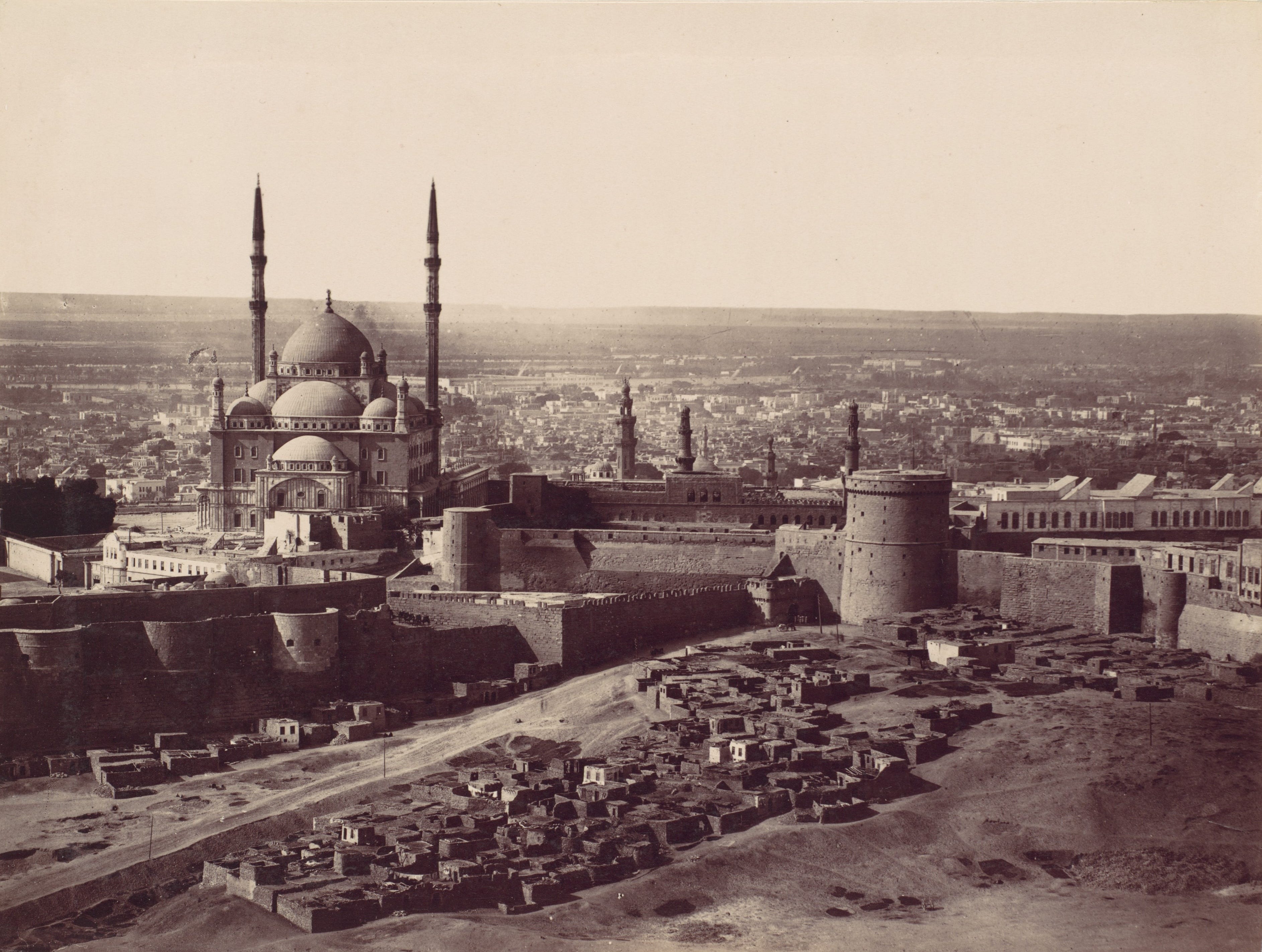
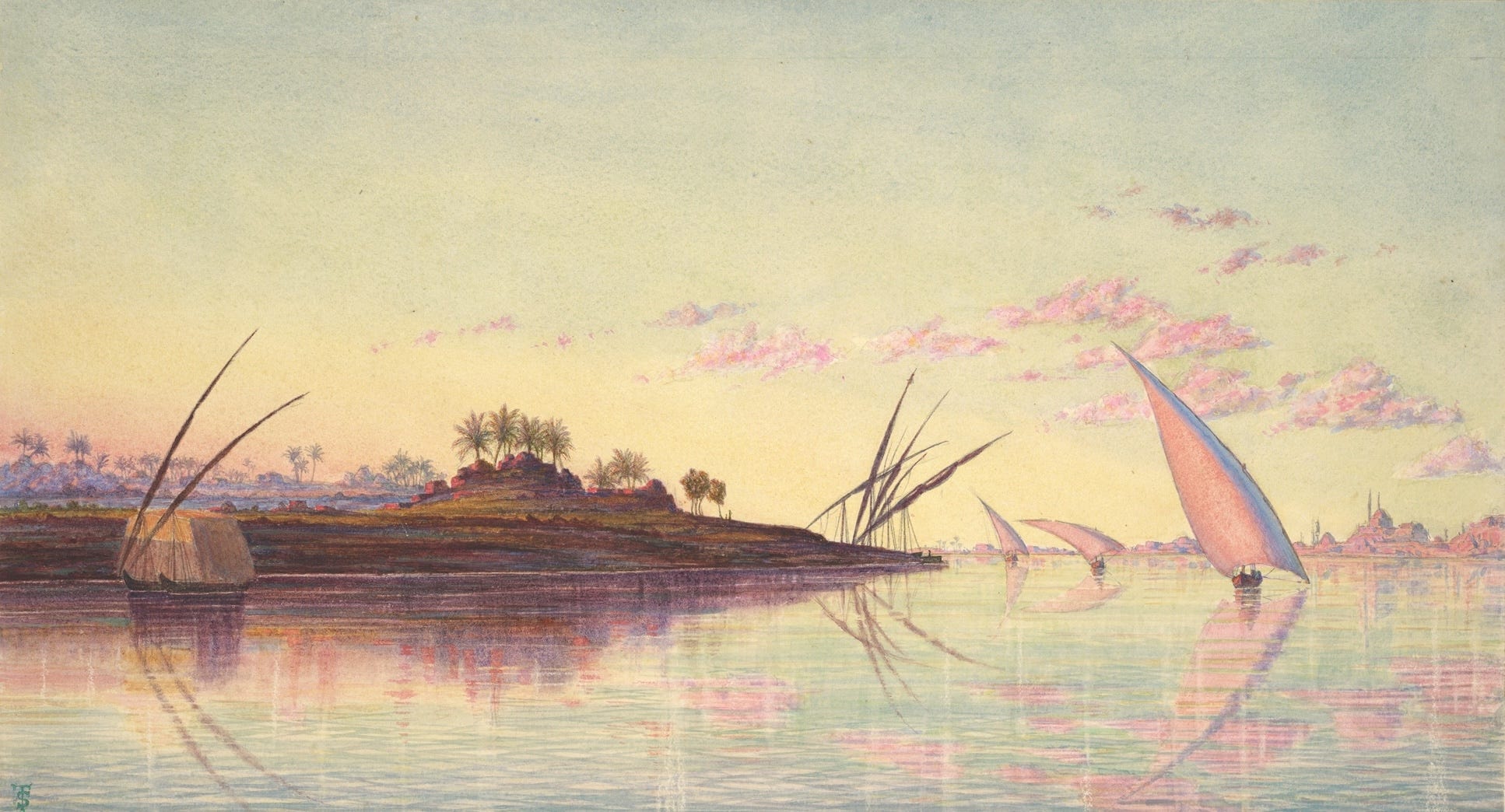
Last month I spent two weeks in Egypt. I’ve travelled quite a bit in my life, but mostly to the monarch-ordered capitals of Europe with their stately avenues lined with plain trees, or to the heavily gridded urban centers of North America tightly controlled by zoning laws and city planners. Never have I experienced anything like Cairo, where cafes and shops spill out onto sidewalks which spill out onto streets, where extension cords zigzag between balconies and windows to supplement faulty wiring, where highway overpasses shelter improvised shopping centers for fruit, and bread, and magazines, and toaster ovens. For miles in any direction, the city lies gray with smog, frenetic with movement, blaring with car horns and the howls of feral dogs. As I stood on the sixth story balcony of my hotel deep in the heart of the city, I felt the whole thing quivering as if at any moment it might burst apart from its own excess of energy.
“I hate Cairo,” said Fatima, the Egyptologist who guided us through the alabaster vessels and gilt sarcophagi of the Grand Egyptian Museum. “I am a villager first. There we live with the Nile. We live with nature. We all know each other. Cairo is . . .” she groped around for a word that wouldn’t denigrate her capital in the eyes of her foreign guests. “It’s just a bit crazy.”
Cairo is not, to put it mildly, living in tune with nature. Plastic trash litters the ground so freely it seems like a tide the city is slowly losing to. Walking through the poorer neighborhoods reveals huge, informal dumps where food waste rots alongside TV sets and old mattresses. People often burn their garbage, sending plumes of acrid smoke into the sky. Once our taxi crossed the Nile with the windows rolled down and I caught a wet, metallic smell from the industrial and agricultural wastewater released into the river. But an hour long Uber ride to the airport costs four dollars. The people of Cairo are making do with what they have.
Many Americans, I think, look at a place like Cairo and see a bleak premonition of the Anthropocene humanity is creating, where the toxicity of water and air are accepted parts of life, where flourishing greenery has less to do with ecosystems than the median income of the neighborhood (after all, the small island in the Nile that houses the foreign embassies and expat communities is as lush as a jungle). It’s easy to look at this city and see only pollution, struggle, and the constant borrowing of today’s survival against tomorrow’s health.
There were times when I felt myself overwhelmed and exhausted by the smog and noise, by the constant heckling as I walked down the street because my husband and I stood out to put it mildly. But more often I found myself seduced and slipping into the city’s rhythms, because although Cairo is about as far from nature as I could imagine getting, there was something familiar and comforting in the city’s chaos.
In most of the human spaces where I have lived and travelled, everything about the built environment addresses itself to the occupant. The billboards want your attention. So do the traffic lights. The flower beds planted in road medians and outside public buildings are there for your enjoyment. The painted crosswalks are there for your safety. “Come in! We’re open!” “$2 off beers 3:00-6:00” “New season! new sweaters! New you!” Everything is designed to speak to you, to beckon you toward particular actions, relationships, transactions, expectations. Our environments solicit and conform us. We’ve become so accustomed to their constant address that most of us don’t even recognize it anymore. Most days I don’t. It’s not until I walk out into my backyard one evening, a full garbage bag held in one fist, and notice with a start a raccoon standing in the shadows by the back fence, his eyes reflecting the white glow of the porch light, his arched back showing he’s just as surprised as I am, that I remember it. His watches me with complete attention. He waits to see what I will do next. He has no terms for our interaction. I stand still and eventually he goes back to snuffling in the leaf litter for any walnuts the squirrels missed. The freedom many of us feel in nature comes from the fact that nature is completely and utterly indifferent to us. The trees, the grasses, the rivers, the deer, the birds have no expectations, no social script. They watch. They react. They go about their lives.
In many ways Cairo addressed me like any built environment, though I couldn’t read the advertisements nor understand most of the words shouted at me from car windows or street corners. In other ways though, the city felt less like a built environment than a physical space for me to use and navigate as I saw fit. Crosswalks were rendered meaningless by the traffic flooding constantly across them. Any flowers there were grew because someone planted them for their own enjoyment, not mine. The city exceeds and overwhelms its own safety constraints and urban planning. It grows in improvisation and desire rather than organization and expectation. It is governed less by codes of conduct than by each and every individual intensely pursuing their own ends—more like a forest than Manhattan. When someone spoke to me in Cairo, it was because they wanted something from me specifically—a dollar, a smile, a selfie—but the city itself did not address me. And in the moments when the heckling ceased, I slipped into the existential silence of a city that neither imagined nor sought an audience.
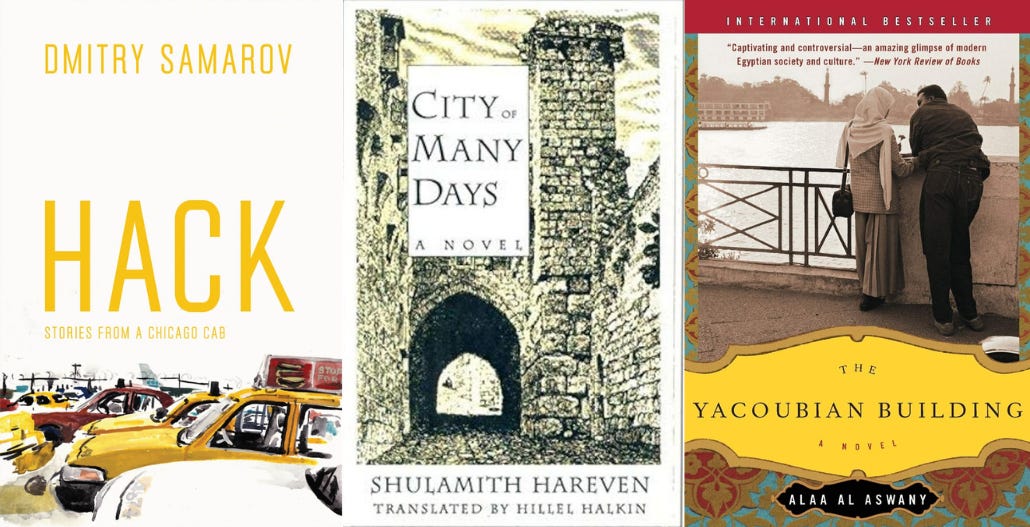
Book recommendations about crowded, messy cities.
Hack by Dmitri Samarov: This is a favorite of mine. In fact, I’ve recommended it before in my post about Henri Lefebrve’s concept of third space. But I can’t help it. (Also, for what it’s worth, I think people using Cairo very much in line with Lefebvre’s ideas is what makes the city feel like a natural space rather than a human one). Samarov worked as a cab driver in Chicago for many years. His little volume is made up of recollections and impressions of those years alongside sketches he drew in between fares. The result is a lovely, harried, impressionistic portrait of one of America’s greatest cities.
The City of Many Days by Shulamith Hareven: This book is fascinating. Tragically out of print for some years now, this novel interweaves the stories of multiple characters living in Jerusalem when it was still under British rule. The city becomes a character in the book, breathing with its own life and vitality.
What I’m reading next: The Yacoubian Building by Alaa Al Aswany. Al Aswany is one of Egypts great novelists, though he currently lives in the United States because his critiques of the current regime endangered him and his family. He grew up in Cairo and often speaks of the beautiful, crumbling history around him. In this best-selling novel, a historic apartment building becomes the emotional and narrative heart of the story, interweaving the lives of the people who live and work there as a microcosm for Egyptian society and history. See this lovely interview with Al Aswany to get a taste of his writing and perspective.
So very good, as always. It reminded me of when I visited Delhi and Mumbai. Somewhat chaotic but with a purpose.