
Voluntary Caricatures
A heresy against identity

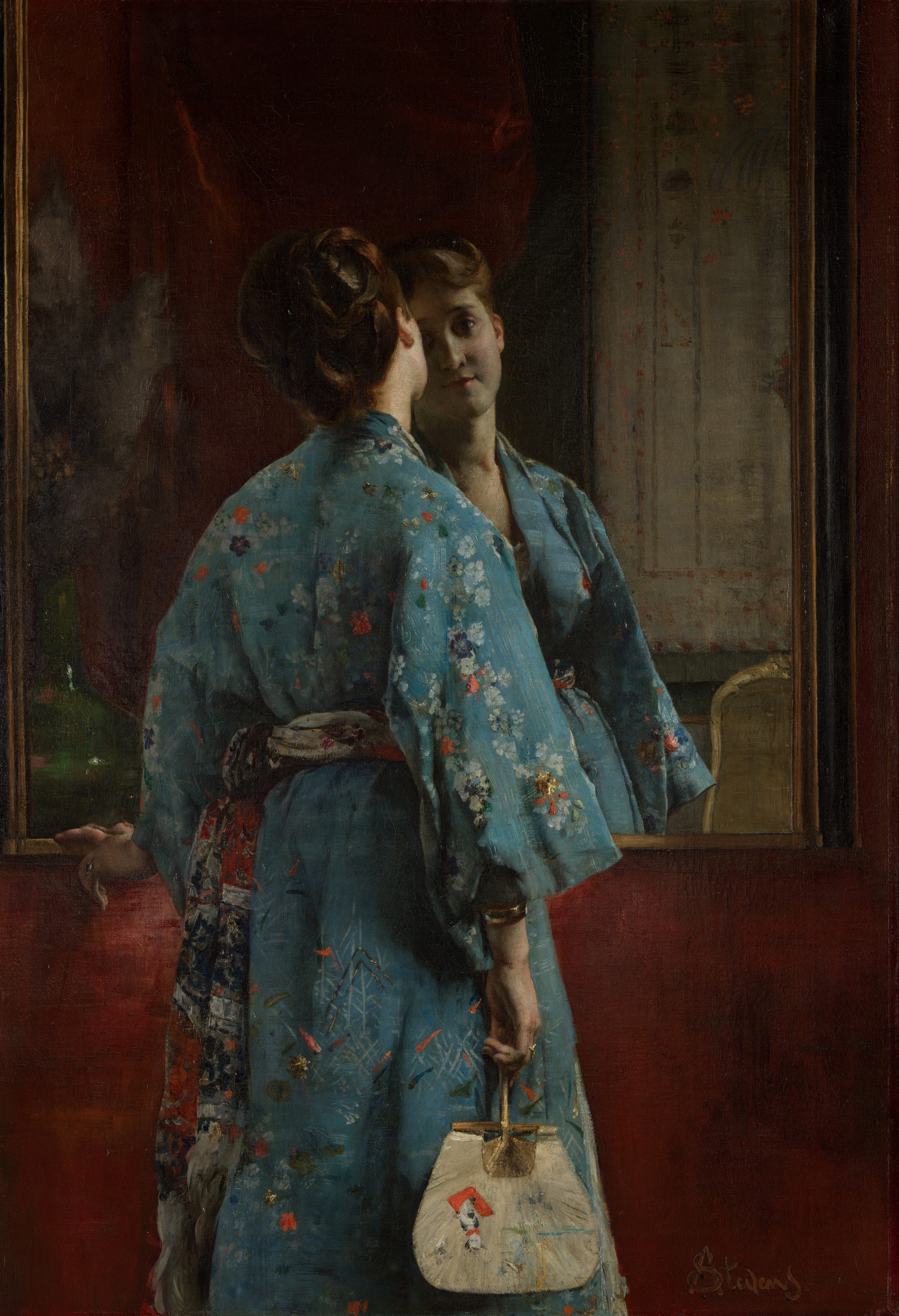
The first summer I taught college classes, I wore a wool pencil skirt, button-down shirt, and Oxford heels every single day. Never mind that I walked twenty minutes to and from campus with a full backpack, or that the temperature was frequently 90 degrees by mid morning, or that when I finally arrived home after four hours exhorting half-asleep students, my apartment didn’t have air conditioning. I’d make it home, peel the drenched fabric off my body, and collapse into a puddle of exhausted salt. I’ll let you imagine the sweat stains.
I’m sure I looked completely absurd, my utterly impractical fashion choices shouting my insecurities to every passerby, but I couldn’t see that at the time. All I felt was my terror that my students wouldn’t see me as an authority figure, either because I was 23 and looked much younger, or because my presence in front of a classroom ranged from confused to fumbling, or because I was desperate for any audience’s love. As Joan Didion said about the same period of her life: was anyone ever so young?
We expect adolescents to go through this stage of over performance. We try to be kind to them, to look askance when their absurdities show. When one of my students proudly informs me that they “are the kind of person who . . . ” I smile inwardly and let the statement pass. You have no idea who you are yet, I whisper. It’s alright. A freshman English major declares that Shakespeare is overrated. A sophomore denounces religion as mass delusion. A senior says she could never marry someone who called her “baby.” They have to stake their flag somewhere. It might as well be atheism, and pet names, and wool skirts. Was anyone ever so young?
We treat this stage as an inevitable part of human development, and I suspect to some degree it is, but I also suspect, like so much else, we conflate the way things are now with the way things have always been.
The novelist and art critic John Berger (who some of you know is a great favorite of mine) spent the second half of his life living in a peasant village in France. By then he’d betrayed his wealthy family’s wishes and run away to London, art school, and communism. He’d rejected the cushy officer commission his class bestowed on him and enlisted as a private in World War II. He’d watched the Soviet Union eat itself alive and wondered where humanity’s hope really lay. Disillusioned and uncertain, he moved to a town in the French Alps where he lived without electricity or running water, alongside farmers who had been working the same land for generations, whose lives were still about survival in all its raw, quotidian difficulty. He devoted himself to recording this culture that he knew would one day, under the forces of capitalism and urbanization, be lost.
“How does such a city, in its extreme form, first strike the villager?” Berger asked in one of his many essays. “For the first time the villager is seeing caricatures, not drawn on paper, but alive.” Berger points out that, in a village of a couple dozen people, everyone knows everyone else at a level of intimacy difficult to fathom now. Not only have they lived alongside each other for decades, working towards their individual and collective survival, but they also know each other’s parents, grandparents, aunts, uncles, and children. Personal histories go back generations. Each individual exists as a node within a branching network of deep social associations. As a result, the peasant doesn’t think much about who he is. He is too busy being.
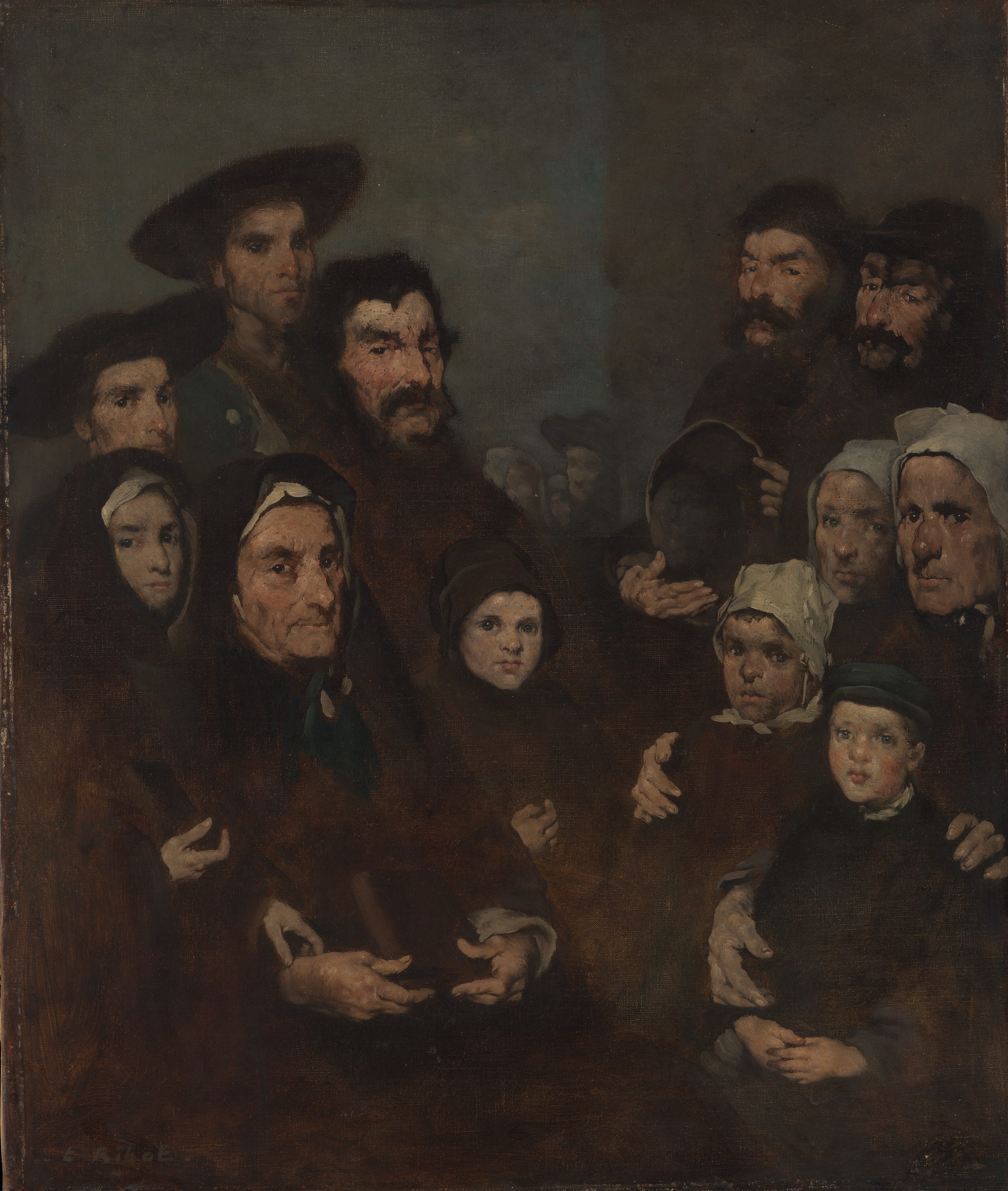
In a city, this is lost. There, Berger said, in order to make ourselves understandable to others, we must become the most of something. In trying to make ourselves socially legible to hundreds of people who don’t know our preferences, our pasts, or our families, we flatten ourselves into a type. A woman trying to communicate her desirability as she crosses the street must be the most sexual. A construction worker trying to communicate his toughness must be the most macho. We make ourselves voluntary caricatures in a desperate hope of feeling seen, and therefore less alone.
Let me put it another way, the small high school I attended as a teenager was not a peasant village, but perhaps the closest thing I’ll ever experience to one. Everyone knew everyone else, their siblings, their classes, which sports they played, which teachers adored them or hated their guts. And because of this, we noticed small changes in habit and behavior. If a boy started parking his truck on the south side of the student lot, because it was closer to the field where his crush played softball, people noticed. If a girl took the long way from Chemistry to American History to avoid her ex as he came out of English, people noticed. Communicating desire, aversion, friendship, or loyalty could be accomplished with small gestures rather than grand declarations because people new each other’s habits and interpreted the meaning behind small shifts. Of course at times this collective knowing and constant attention felt oppressive. What a relief it was to escape home to one’s bed with a walkman and headphones at the end of the day, to snatch a few hours of delicious, unobserved solitude . . . at least, until Facebook came along. Suddenly we were not alone even at home. People were watching what you were posting—or weren’t posting—at all hours.
Berger did not live to see the explosion of social media in our society, but I can well imagine what he would have said. The identity crises that began with urbanization reach full meltdown on the Internet. Now we are not just trying to make ourselves legible to the people we pass on the streets of our cities, but the people passing our profiles the world over. And they have nothing to go on. They don’t know that our occasional flashes of temper spring from memories of an older sibling pushing us around as a kid. Or that our sexual prudishness comes from a mother the church ladies whispered about. They don’t share with us a memory of a winter sunset over our town, or the songs of the first birds returning in spring. Depth, texture, and longevity of connection are lost. A knowing social network is replaced with a distant, vaguely hostile audience.
Yet the Internet offers itself as the cure for the malady it created. EXPRESS YOURSELF! BE THE REAL YOU! Communicate your being to people with whom no common ground can be assumed, also you have 280 characters. Is it surprising that as a twenty-something I sat in my bedroom absorbed by the trash heap of personality quizzes that sites like Buzzfeed put out every hour of every day? WHAT IS THE COLOR OF YOUR SOUL! WHICH GREEK GODDESS ARE YOU! WHICH POP SONG CAPTURES YOUR TRUE ESSENCE! Like a make-up ad where an airbrushed face creates an insecurity before a husky voice offers the product as a “solution,” the Internet stole the last shreds of our self-conceptions and offered cartoons in their place. The make-up being sold can never fill the insecurity the ad created (no human is or ever will be “poreless”), and no amount of being told you are a lilac Aphrodite “Fergalicious” will ever salve the pain of being watched rather than known by your fellow humans.
Of course it was around this time that “identity politics” really took hold, a system that is not about individuals at all (if by that word we mean the unique complexity of each person) but about how everyone exists as a Venn diagram of group labels, each of which comes with tacit assumptions about life experiences and political stances. In the weeks after the most recent presidential election, I saw several protest signs that said “Listen to Black women,” never mind that as a political imperative that only makes sense if every Black woman holds the same beliefs—which of course, they don’t. The idea of a Black woman who is, because of her gender and race, a beacon of empathy for all marginalized groups and thus holds every proper liberal belief is a caricature created by the political left. In case we’ve forgotten: Trump gained ground with Black and Hispanic voters with each election he ran in; my most staunchly liberal students are always white and middle class. Democrat voters have acquiesced to the caricature of the leftist-paragon Black woman, in part, because our technologies have primed us to think of people as types anyway.
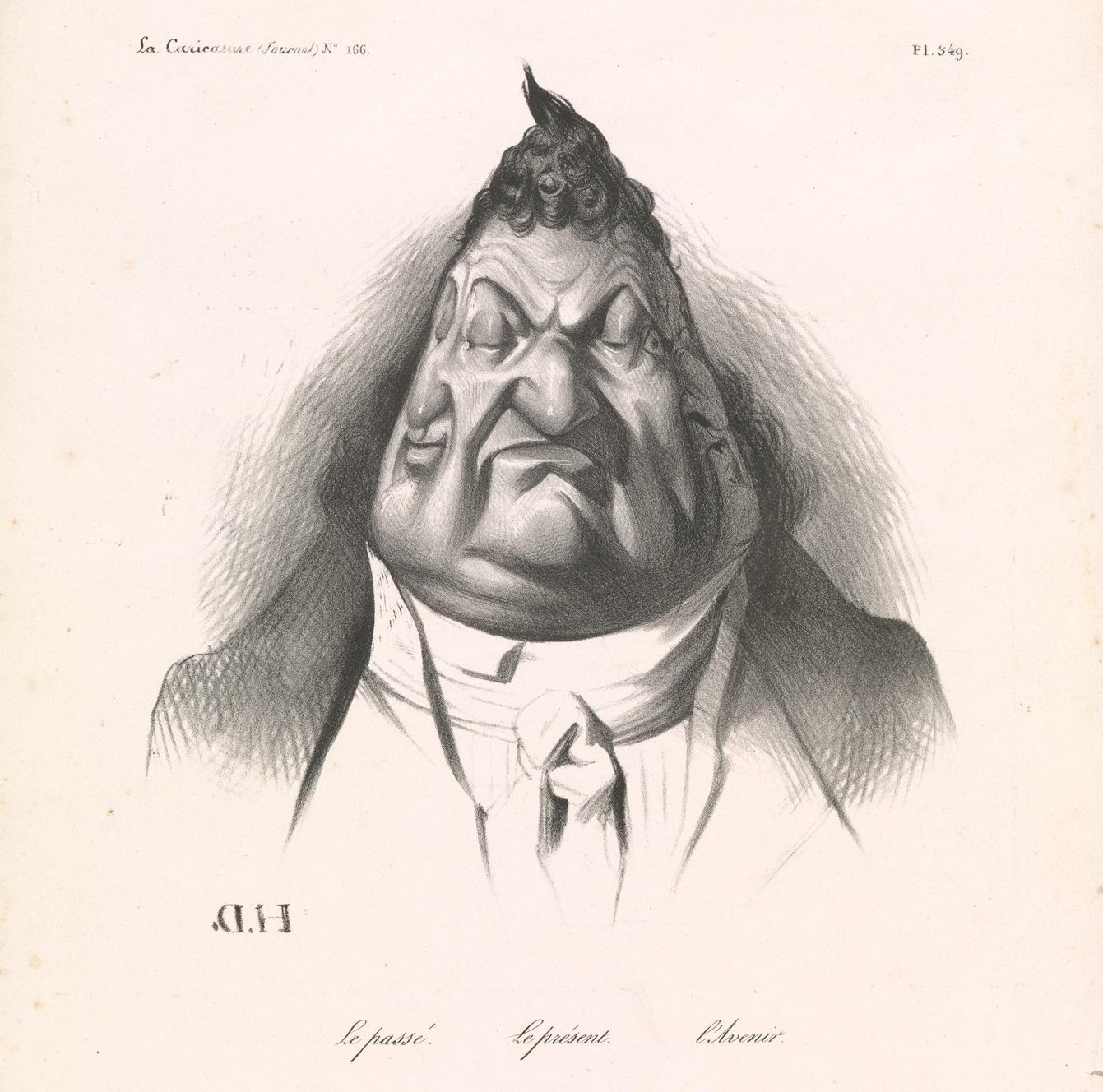
The left of course is not unique in its willingness to devolve to caricature. I would argue that Trump’s public persona is a caricature itself: a clownish performance of fuck-it, devil-may-care, I-do-what-I-want power. That’s why he’s been so hard to parody (gestures at the string of Saturday Night Live failures). What’s horrifying is not so much that he’s successfully gamed the system by acting so, but that many of his supporters relate to his cartoonish performance so strongly. (As an interesting side-note, the sitter for the drawing below was none other than King Louis Philippe I who ruled France from 1830-1848, as evidence that those in power have long history of embracing their caricatures.) Berger’s peasant neighbors, I suspect, would have no idea how to react to Trump.
A few weeks ago I was dutifully lifting weights at the gym, completing the squats that I’ve been told will help protect my knees and back from the aches of middle age. I looked up from a set and saw my own face trapped in the nighttime blackness out the window. Does anyone on Earth know that you’re here? a voice whispered. My husband had driven a town over and wouldn’t be back until late. Both children were spending the night at friends’ houses. It was an evening of unusual freedom, anonymity, and solitude—rare pleasures I usually revel in. But as I looked at my own reflection in the glass and set down my weights with a familiar twinge beneath my left patella, I felt escape and surrender blur into each other. All of this is passing away, the voice whispered. Everything, all of this, will one day be gone. Of course for the peasants Berger lived beside, deep social networks were not just pilings supporting the great bridge of life, but a seawall protecting humanity from the unrelenting tide of death. Everyone who knows you now will die. A village holds its graves close, and its stories closer. That night I went home and deleted every social media app from my phone. I wrote a few letters and called a few friends. We might never regain the village, but we can at least refuse to mistake an audience for a community.
Book recommendations!
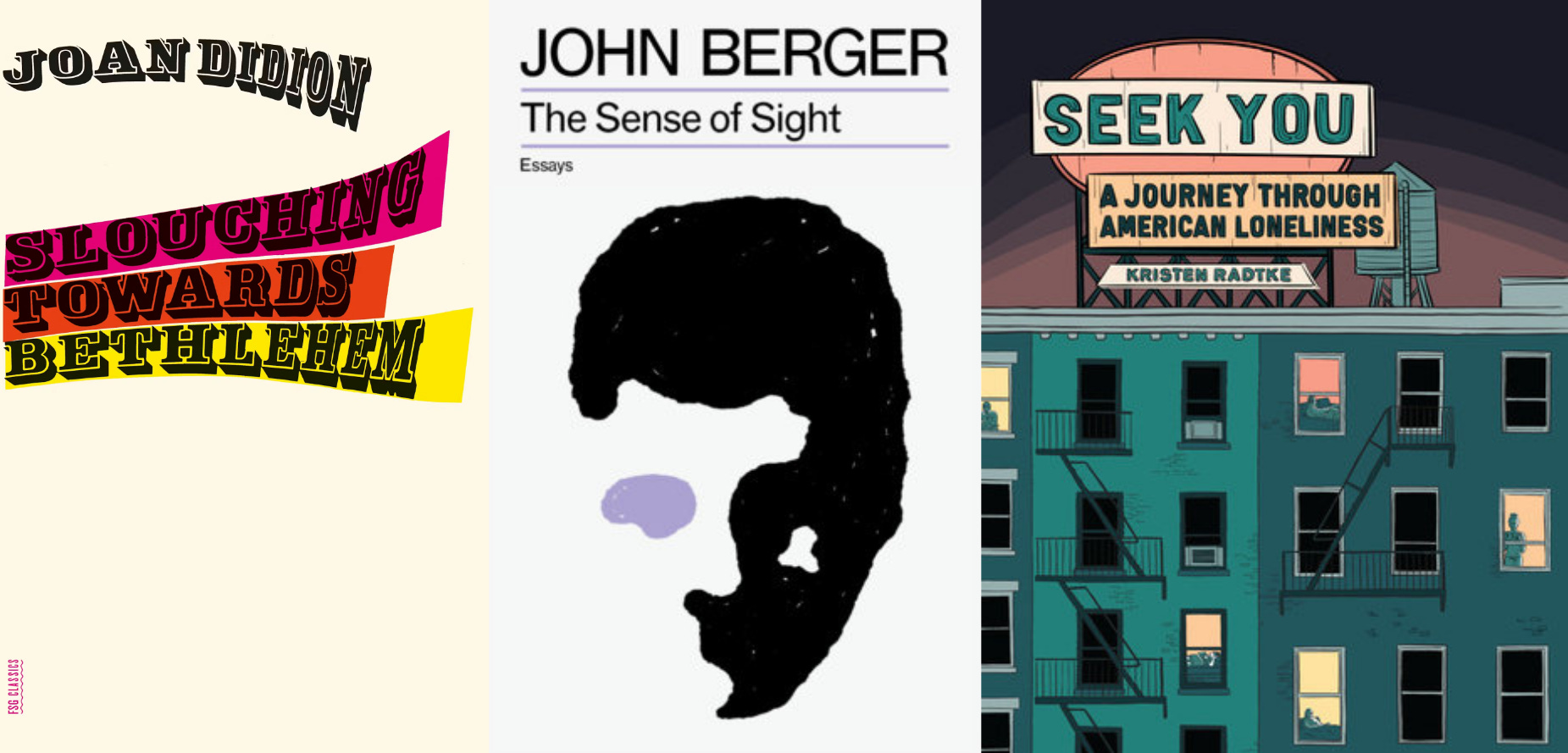
The two writers I mentioned above—Joan Didion and John Berger—are incredible for anyone who wants to feel the particular flavors of decades past. Didion evokes the cultural turmoil of the 60s and 70s with unmatched vividness. Berger conveys Europe of the 1940s-70s like no one else. Specifically the quotes here are from Didion’s essay about being a young writer in New York, “Goodbye to All That,” which is the closing piece of her collection Slouching Toward Bethlehem. The Berger essay about peasant experiences comes from his collection The Sense of Sight. Pick up Didion if you want biting political commentary and cultural criticism. Pick up Burger if you want tender portraits of Europe as it once was, interspersed with meditations on painting and other art.
For a poignant and well-researched look at how loneliness and isolation has accelerated in our culture over the last hundred years, I suggest Kristen Radke’s graphic memoir Seek You. In it, she describes her own experiences as a young woman moving rootlessly from city to city. Throughout these stories she interweaves research on the ways human beings are biologically programed to crave closeness and feel ashamed of loneliness. It’s fascinating, readable, and beautifully illustrated.
Olivia Laing's The Lonely City seems worth mentioning here.